

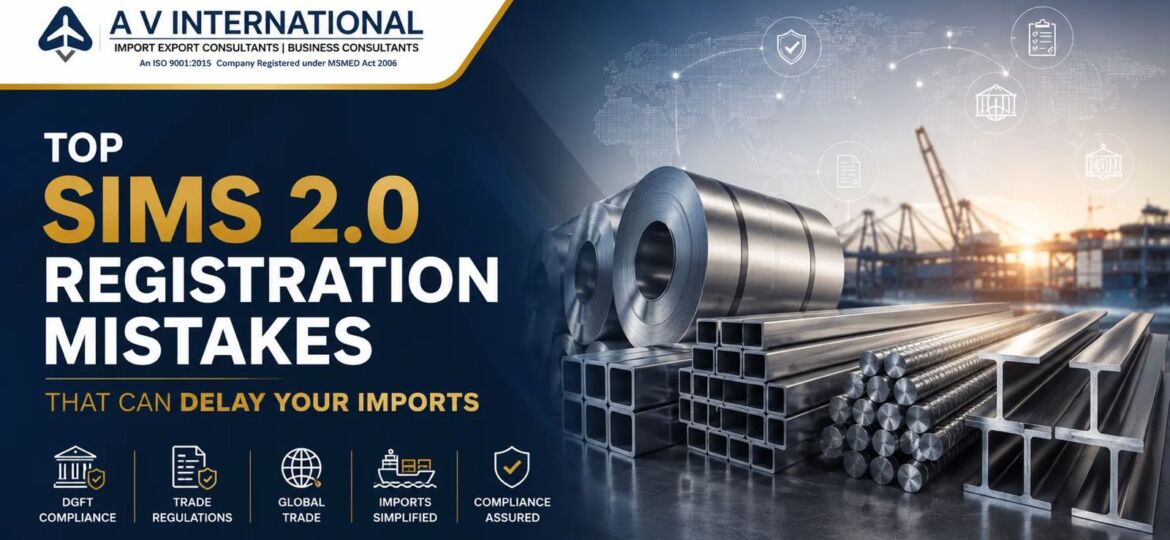
Key Takeaways
- SIMS 2.0 registration errors can directly delay steel and restricted imports in India.
- Incorrect importer details are one of the most common reasons for rejection.
- Mismatch between DGFT, IEC, and SIMS data causes compliance issues.
- Late SIMS filing can lead to shipment detention at customs.
- Proper document validation reduces approval delays significantly.
- Importers must ensure correct product classification before submission.
- Early SIMS registration improves smooth customs clearance in 2026.
Introduction
SIMS 2.0 (Steel Import Monitoring System) has become a critical compliance requirement for steel importers in India. However, many businesses still face delays due to small but costly registration mistakes.
Even a minor error in importer details, product classification, or DGFT data can lead to shipment holds, customs delays, or rejection of SIMS application.
If you are importing steel in 2026, understanding top SIMS 2.0 registration mistakes that can delay your imports is essential for smooth clearance and compliance.
What is SIMS 2.0 Registration?
SIMS 2.0 is a digital monitoring system introduced by DGFT to track steel imports in India.
Importers must register product details, shipment information, and importer credentials before goods arrive in India.
It ensures transparency, compliance, and monitoring of restricted steel imports.
Why SIMS 2.0 Registration is Important?
SIMS 2.0 is mandatory because it:
- Tracks steel import quantity and value
- Ensures regulatory compliance
- Helps customs validate shipments
- Prevents illegal or misdeclared imports
- Supports DGFT trade monitoring system
Without proper SIMS approval, customs clearance may be delayed or rejected.
Top SIMS 2.0 Registration Mistakes That Delay Imports
1. Incorrect IEC Details
Mismatch between IEC and SIMS application leads to rejection.
2. Wrong Product Classification
Incorrect HS code selection causes compliance failure.
3. Late Registration
SIMS must be filed before shipment arrival; delay leads to detention.
4. Mismatch in Quantity or Invoice Data
Even small differences in declared quantity can trigger rejection.
5. Invalid Importer Information
Incorrect GST, PAN, or address details slow approval.
6. Missing Supporting Documents
Incomplete documentation causes verification delays.
7. DGFT Portal Errors
Technical or DSC issues can block submission.
How to Avoid SIMS 2.0 Registration Delays
 Verify IEC and GST details before submission Use correct HS code classification File SIMS before shipment arrival Cross-check invoice and shipping details Ensure active Digital Signature Certificate (DSC) Maintain consistent importer documentation
What Happens If SIMS Registration is Delayed?
- Customs clearance hold
- Port detention charges
- Shipment delay
- Additional compliance queries
- Financial penalties in some cases
Practical Compliance Tips for 2026
- Always pre-file SIMS before import shipment
- Keep DGFT and ICEGATE data synchronized
- Verify supplier invoice details carefully
- Maintain updated importer records
- Work with compliance experts if needed
Conclusion
Understanding top SIMS 2.0 registration mistakes that can delay your imports is essential for smooth steel import operations in India.
By avoiding common errors and ensuring accurate documentation, importers can significantly reduce delays and improve compliance efficiency in 2026.
Need Expert Help?
A V International provides complete assistance in:
- SIMS 2.0 registration
- DGFT compliance
- Import licensing
- Customs documentation
- IEC and trade advisory
Written By
Akash Bhangare
With 10+ years of experience in import-export compliance and DGFT regulations in India.Associated with A V International, a leading consultancy with 35+ years of expertise in trade compliance, licensing, and customs advisory services.
SARAL SIMS for Steel Imports in India – Complete Guide The Government of India has introduced SARAL SIMS (Simplified Steel…

Top Export Compliance Mistakes: DGFT Advance Authorization, EPCG & CPCB (2025 Guide) Exporting in India can feel like a legal…

Environmental Clearance CPCB: Quick Guide for Exporters If you’re an Indian exporter or manufacturer working under schemes like the Advanced…

DGFT e-BRC Rule 2025: Key Update for Advance Authorization & EPCG Holders The Directorate General of Foreign Trade (DGFT) has…
