
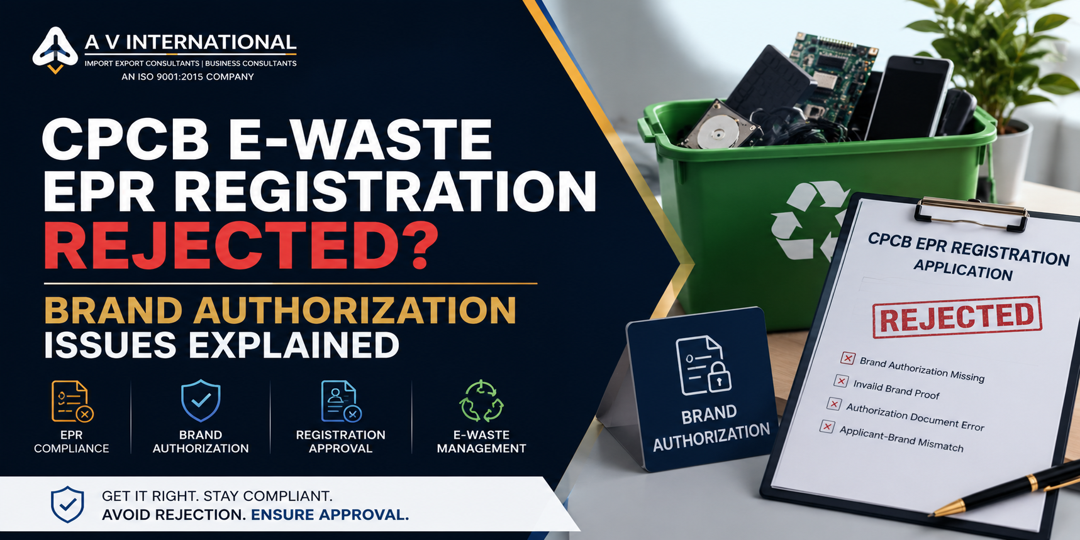

CPCB E-Waste EPR Registration Rejected? Brand Authorization Issues Explained (2026 Guide)
Key Takeaways
- Brand authorization mismatch is a top reason for CPCB EPR rejection.
- CPCB requires valid OEM/brand owner authorization for EPR registration approval.
- Missing, expired, or incorrect authorization letters lead to application rejection.
- Proper documentation alignment between brand, importer, and recycler is mandatory.
- EPR portal verification has become stricter in 2026 compliance updates.
- Early document validation reduces rejection risk significantly.
- Correcting authorization issues can quickly restore approval eligibility.
Introduction
CPCB E-Waste EPR registration has become more stringent in 2026 due to stricter compliance enforcement under environmental regulations.
One of the most common reasons for rejection is brand authorization issues, where documentation submitted does not meet CPCB requirements.
If your EPR application has been rejected, understanding the exact reason behind brand authorization failure is critical for re-approval and compliance success.
This guide explains why rejection happens, how to fix it, and how to ensure smooth approval in future submissions.
What Is Brand Authorization in CPCB EPR?
Brand authorization is a legal approval issued by the brand owner or OEM allowing a producer or importer to manage EPR responsibilities under CPCB rules.
It confirms that the applicant is authorized to handle recycling, collection, and compliance obligations for that brand.
Without valid authorization, CPCB cannot approve EPR registration.
Why CPCB EPR Registration Gets Rejected
Most rejections occur due to:
- Invalid brand authorization letter
- Missing signature or company seal
- Expired authorization validity
- Mismatch between brand name and registration details
- Unauthorized third-party submissions
- Incorrect EPR category mapping
- Missing OEM declaration
Documents Required for Brand Authorization Compliance
- Brand Authorization Letter from OEM
- Company Registration Certificate
- IEC / GST Certificate
- PAN of Company
- EPR Application Form
- Agreement between brand owner and producer
- Valid identity of authorized signatory
How to Fix CPCB EPR Brand Authorization Rejection
Step 1: Identify Rejection Reason
Check CPCB portal remarks carefully for authorization-related errors.
Step 2: Validate Brand Documents
Ensure:
- Correct brand name spelling
- Valid authorization period
- Proper signatory approval
Step 3: Reissue Authorization Letter (if needed)
Request updated authorization from OEM or brand owner.
Step 4: Correct EPR Application Data
Align brand details with CPCB application form.
Step 5: Resubmit Application
Upload corrected documents and resubmit for review.
Common Brand Authorization Mistakes
- Using distributor instead of OEM authorization
- Submitting unsigned letters
- Wrong brand classification
- Copy-pasted templates without validity
- Missing company seal or stamp
- Expired agreements
Why CPCB Is Strict in 2026
- Increased focus on environmental accountability
- Digital verification of brand ownership
- Integration with GST & IEC databases
- Stronger enforcement of EPR compliance rules
Practical Compliance Tips
- Always verify OEM authorization before applying
- Maintain updated brand agreements
- Keep digital copies of all approvals
- Cross-check brand names across all documents
- Avoid third-party unauthorized submissions
Frequently Asked Questions (FAQs)
Why is my CPCB EPR application rejected?
Mostly due to brand authorization errors, missing documents, or mismatched details.
Who can issue brand authorization?
Only OEM or brand owner can issue valid authorization.
Can I reapply after rejection?
Yes, after correcting errors and updating documents.
Is brand authorization mandatory for EPR?
Yes, it is a compulsory requirement under CPCB guidelines.
Conclusion
Understanding CPCB E-Waste EPR registration rejection due to brand authorization issues is essential for smooth compliance approval in 2026.
Most errors are documentation-based and can be corrected quickly with proper validation and OEM coordination.
Accurate documentation ensures faster approval, regulatory compliance, and uninterrupted business operations.
Need Expert Help?
A V International provides complete support for:
- CPCB EPR Registration
- Brand Authorization Compliance
- Environmental Licensing
- DGFT & Import Export Compliance
Written By
Akash Bhangare
With more than 10 years of experience in export-import and environmental compliance in India.
Associated with A V International, a firm with 35+ years of expertise in licensing, regulatory approvals, and compliance consulting.
Recent Posts
- CPCB E-Waste EPR Registration Rejected? Brand Authorization Issues Explained
- Top SIMS 2.0 Registration Mistakes That Can Delay Your Imports
- How to Resolve IGST Refund Pending Issues After Shipping Bill Filing Quickly
- SIMS 2.0 Compliance Checklist for Steel Importers in India (2026)
- How to Calculate Plastic EPR Liability Correctly in 2026
FeATURED ARTICLES
SARAL SIMS for Steel Imports in India – Complete Guide The Government of India has introduced SARAL SIMS (Simplified Steel…
Top Export Compliance Mistakes: DGFT Advance Authorization, EPCG & CPCB (2025 Guide) Exporting in India can feel like a legal…
Environmental Clearance CPCB: Quick Guide for Exporters If you’re an Indian exporter or manufacturer working under schemes like the Advanced…
DGFT e-BRC Rule 2025: Key Update for Advance Authorization & EPCG Holders The Directorate General of Foreign Trade (DGFT) has…

