

Key Takeaways
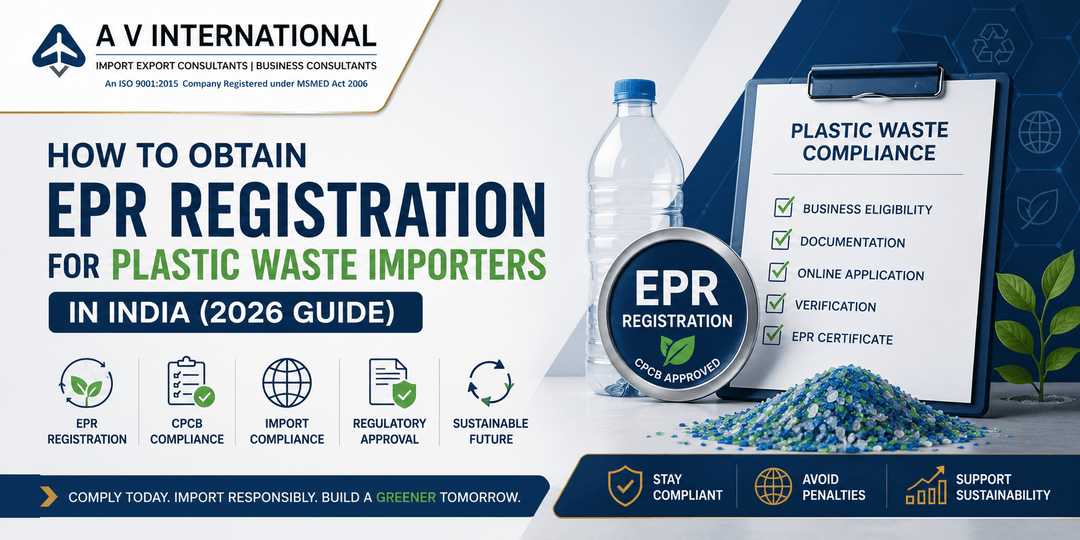
- Plastic Waste EPR Registration is mandatory for eligible importers under the Plastic Waste Management Rules.
- Importers must register through the CPCB EPR Plastic Waste Portal before importing applicable plastic packaging.
- Proper documentation and accurate business details help avoid application rejection and processing delays.
- Annual compliance, record maintenance, and EPR target fulfillment are essential after registration.
- Professional compliance support can simplify the registration process and reduce regulatory risks.
Introduction
India’s Plastic Waste Management Rules have made Extended Producer Responsibility (EPR) a critical compliance requirement for businesses dealing with plastic packaging. Importers bringing plastic-packaged products into India must understand their obligations before commencing imports.
Without valid EPR Registration, businesses may face customs clearance issues, regulatory notices, penalties, and operational disruptions.
This comprehensive 2026 guide explains who requires Plastic Waste EPR Registration, eligibility criteria, required documents, the registration process, compliance responsibilities, and practical tips for obtaining approval smoothly.
What Is Plastic Waste EPR Registration?
Plastic Waste EPR Registration is an authorization issued through the Central Pollution Control Board (CPCB) EPR Portal for eligible Producers, Importers, and Brand Owners (PIBOs).
The registration ensures businesses take responsibility for environmentally sound management, collection, recycling, and disposal of plastic packaging introduced into the Indian market.
Featured Snippet Answer
Plastic Waste EPR Registration is mandatory for eligible importers bringing plastic-packaged products into India. Businesses must register through the CPCB EPR Portal, submit the required documents, declare plastic packaging quantities accurately, and comply with annual EPR obligations to avoid customs delays, penalties, and regulatory action.
Who Needs EPR Registration?
Plastic Waste EPR Registration generally applies to:
- Importers of packaged consumer goods
- Brand Owners importing packaged products
- Electronics importers
- Cosmetic and personal care importers
- Food and beverage importers
- Medical device importers
- Chemical importers
- Toy importers
- Household product importers
- E-commerce businesses importing packaged goods
Businesses should evaluate whether their imported products contain plastic packaging covered under applicable EPR regulations.
Documents Required for Plastic Waste EPR Registration
Before applying, keep the following documents ready:
- Import Export Code (IEC)
- GST Registration Certificate
- PAN Card
- Company Incorporation Certificate
- CIN/LLP Registration (where applicable)
- Authorized Signatory ID Proof
- Business Address Proof
- Plastic Packaging Details
- Category-wise Plastic Packaging Information
- Import Data
- Board Resolution or Authorization Letter
- Digital Signature Certificate (if applicable)
Providing complete and accurate documentation significantly improves approval chances.
Step-by-Step Process to Obtain Plastic Waste EPR Registration
Step 1: Determine Applicability
Confirm whether your business qualifies as an Importer under the Plastic Waste Management Rules.
Step 2: Classify Plastic Packaging
Identify the applicable plastic packaging categories based on the products you import.
Step 3: Prepare Documentation
Compile business registration documents, importer details, and packaging information before starting the application.
Step 4: Register on the CPCB EPR Portal
Create your account and complete the online registration with accurate business information.
Step 5: Upload Supporting Documents
Upload all mandatory documents along with category-wise plastic packaging declarations.
Step 6: Respond to CPCB Queries
If CPCB raises observations or requests additional information, submit the required clarification promptly.
Step 7: Obtain EPR Registration Certificate
After successful verification, the Plastic Waste EPR Registration Certificate is issued through the CPCB Portal.
Compliance Responsibilities After Registration
Obtaining the certificate is only the first step. Importers must also:
- Meet annual EPR targets
- Purchase valid Plastic Waste EPR Certificates where applicable
- Maintain import records
- Submit Annual Returns within prescribed timelines
- Maintain recycling documentation
- Keep compliance records for inspections
- Follow updated CPCB guidelines
Common Reasons for EPR Registration Delays
Many applications experience delays because of:
- Incorrect IEC or GST details
- Incomplete company information
- Incorrect plastic packaging categorization
- Missing supporting documents
- Mismatch between business registrations
- Poor quality document uploads
- Incorrect import quantity declarations
- Delayed responses to CPCB observations
Reviewing every detail before submission helps avoid unnecessary processing delays.
Best Practices for Faster Approval
To improve the chances of successful registration:
- Verify all company details carefully.
- Ensure IEC, GST, and PAN information matches official records.
- Prepare accurate plastic packaging data.
- Upload clear and readable documents.
- Monitor the application status regularly.
- Respond promptly to CPCB clarification requests.
- Maintain proper compliance records for future reporting.
Practical Compliance Checklist
Before submitting your application, confirm that you have:
 IEC Certificate
GST Registration
PAN Card
Company Registration Documents
Business Address Proof
Plastic Packaging Classification
Import Data
Authorization Letter
Supporting Documents
Verified Business Information
Frequently Asked Questions (FAQs)
1. Is Plastic Waste EPR Registration mandatory for importers?
Yes. Eligible importers introducing plastic-packaged products into India are generally required to obtain EPR Registration under applicable Plastic Waste Management Rules.
2. Which authority issues Plastic Waste EPR Registration?
Plastic Waste EPR Registration is processed through the Central Pollution Control Board (CPCB) EPR Portal.
3. Which documents are required?
Typically, businesses need IEC, GST Registration, PAN Card, Company Registration Certificate, Address Proof, Plastic Packaging Details, Import Data, and supporting compliance documents.
4. Can incorrect information delay approval?
Yes. Incorrect business details, incomplete documentation, or inaccurate plastic packaging declarations may delay processing or result in rejection.
5. Do importers need to file Annual Returns?
Yes. Registered businesses are generally required to comply with applicable annual reporting and EPR target obligations under CPCB guidelines.
6. Can compliance consultants assist with EPR Registration?
Yes. Professional consultants help businesses prepare documentation, classify packaging correctly, complete portal registration, and manage post-registration compliance.
Conclusion
Plastic Waste EPR Registration has become an essential compliance requirement for importers introducing plastic-packaged products into India. A properly prepared application, accurate packaging classification, and complete documentation significantly improve approval chances while reducing the risk of delays.
By understanding the registration process and maintaining ongoing compliance, businesses can avoid regulatory issues, facilitate smoother imports, and operate confidently in accordance with India’s Plastic Waste Management framework.
Need Help with Plastic Waste EPR Registration?
A V International has over 35 years of experience in EPR Registration, Plastic Waste Compliance, DGFT Licensing, Legal Metrology, IEC Registration, and Import-Export Consulting.
Our experts assist businesses with:
- Plastic Waste EPR Registration
- CPCB Portal Registration
- Documentation Support
- Plastic Packaging Classification
- Annual Return Filing
- EPR Compliance Management
- DGFT & Import-Export Consulting
- End-to-End Regulatory Assistance
Written By
Akash Bhangare
Having more than 10 years of experience in EPR Compliance, Legal Metrology, DGFT Regulations, and Import Export Consulting Services in India.
Associated with A V International, a company with over 35 years of expertise in Environmental Compliance, EPR Registrations, Licensing, and Regulatory Approvals.
SARAL SIMS for Steel Imports in India – Complete Guide The Government of India has introduced SARAL SIMS (Simplified Steel…

Top Export Compliance Mistakes: DGFT Advance Authorization, EPCG & CPCB (2025 Guide) Exporting in India can feel like a legal…

Environmental Clearance CPCB: Quick Guide for Exporters If you’re an Indian exporter or manufacturer working under schemes like the Advanced…

DGFT e-BRC Rule 2025: Key Update for Advance Authorization & EPCG Holders The Directorate General of Foreign Trade (DGFT) has…
