

India's Leading DGFT Consultants
Top LMPC Registration Rejection Reasons and How to Avoid Them in 2026 – Complete Compliance Guide for Importers

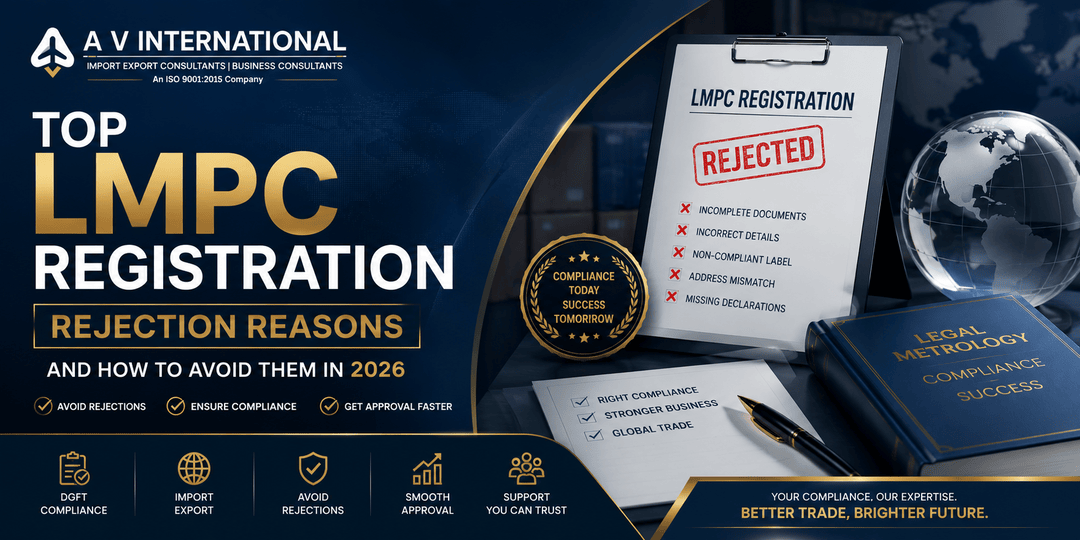
Top LMPC Registration Rejection Reasons and How to Avoid Them in 2026

Key Takeaways

  • LMPC registration is mandatory for eligible importers of pre-packaged commodities.
  • Most rejections occur due to incomplete documentation and incorrect application details.
  • Product labeling non-compliance is one of the major reasons for rejection.
  • Incorrect importer information and authorization documents frequently delay approvals.
  • Following Legal Metrology requirements significantly improves approval chances.
  • Professional application review helps minimize rejection risks.

Introduction

Obtaining an LMPC (Legal Metrology Packaged Commodities) Registration Certificate is an essential compliance requirement for importers dealing with pre-packaged commodities in India. However, many businesses experience unnecessary delays because their applications are rejected during the verification process.

Most rejections are preventable. Understanding the common reasons behind LMPC registration rejection can help businesses avoid repeated submissions, customs delays, and regulatory issues.

This guide explains the most common LMPC registration rejection reasons in 2026 and provides practical recommendations for faster approvals.

Why Do LMPC Applications Get Rejected?

Authorities carefully verify every application to ensure compliance with the Legal Metrology Act, 2009 and the Legal Metrology (Packaged Commodities) Rules.

Applications are generally rejected because of:

  • Missing documents
  • Incorrect business information
  • Labeling deficiencies
  • Invalid authorizations
  • Mismatched importer details
  • Non-compliance with applicable regulations
Top LMPC Registration Rejection Reasons
1. Incomplete Documentation

Missing mandatory documents remain the most common reason for rejection.

Common examples include:

  • Import Export Code (IEC)
  • GST Registration
  • PAN
  • Address proof
  • Importer authorization
  • Identity proof of authorized signatory

Always verify that every required document is attached before submission.

2. Incorrect Business Details

Authorities compare application information with official government records.

Errors such as:

  • Incorrect company name
  • Wrong GST number
  • Incorrect IEC
  • Address mismatch

may result in application rejection.

3. Non-Compliant Product Labels

Product labels must satisfy Legal Metrology requirements.

Common labeling mistakes include:

  • Missing importer name
  • Missing importer address
  • Incorrect net quantity
  • Missing MRP
  • Country of origin not mentioned
  • Missing customer care details

Even minor labeling issues can delay registration.

4. Improper Authorization Documents

Where an authorized representative files the application, valid authorization documents are essential.

Common mistakes include:

  • Unsigned authorization letter
  • Expired authorization
  • Missing company seal
  • Incorrect signatory
5. Poor Quality Scanned Documents

Applications are often delayed because uploaded documents are:

  • Blurred
  • Cropped
  • Illegible
  • Password protected
  • Improperly scanned

Upload clear, readable PDF copies whenever possible.

6. Incorrect Product Information

Importers sometimes provide incomplete product descriptions.

Authorities may seek clarification if:

  • Product category is unclear
  • Packaging details are missing
  • Commodity description is inaccurate

Provide precise product information.

7. Address Verification Issues

The business address should match supporting documents.

Differences between:

  • GST records
  • IEC records
  • Company documents
  • Lease agreements

can trigger additional verification.

8. Failure to Respond to Department Queries

Authorities may issue clarification requests.

Delays in responding can extend processing timelines or lead to rejection.

Monitor your application regularly and respond promptly.

Best Practices for Faster LMPC Approval

Improve approval chances by following these practices:

  • Verify all business details before submission.
  • Review product labels for compliance.
  • Upload high-quality scanned documents.
  • Ensure document consistency across all records.
  • Maintain valid authorization documents.
  • Respond quickly to departmental queries.
  • Conduct a final compliance review before filing.
Featured Snippet Answer

LMPC registration applications are commonly rejected due to incomplete documents, incorrect business information, non-compliant product labels, poor-quality uploads, address mismatches, invalid authorization letters, and delayed responses to departmental queries. Careful document verification and compliance review before submission can significantly improve approval chances and reduce processing delays.

FAQs

1. What is the most common reason for LMPC registration rejection?

Incomplete documentation and incorrect business information are among the most frequent reasons.

2. Can incorrect product labels delay approval?

Yes. Labeling errors are one of the leading causes of objections during verification.

3. Can I reapply after rejection?

Yes. After correcting the deficiencies, you can submit a fresh or revised application as applicable.

4. How long does LMPC registration usually take?

Processing time varies depending on document completeness, application accuracy, and departmental verification.

5. Is GST mandatory for LMPC registration?

Eligible applicants generally need valid business registration documents, including GST where applicable.

6. Can consultants help reduce rejection chances?

Yes. Professional review helps identify compliance gaps before submission, reducing the likelihood of objections and delays.

Conclusion

Most LMPC registration rejections result from avoidable errors rather than complex legal issues. Businesses that submit complete documentation, ensure accurate business information, comply with labeling requirements, and promptly respond to departmental queries can significantly improve their chances of obtaining timely approval.

A structured compliance approach saves both time and resources while ensuring uninterrupted import operations.

Need Expert Assistance?

Navigating LMPC registration requirements can be challenging, especially for first-time importers. A V International, backed by over 35 years of experience, assists businesses with LMPC Registration, DGFT Compliance, Import Export Consulting, and various regulatory approvals. Our experts help review documentation, identify compliance gaps, and support businesses through the registration process to minimize delays and improve approval success.

Written By

Akash Bhangare

Having more than 10 years of experience in EPR Compliance, Legal Metrology, DGFT Regulations, and Import Export Consulting Services in India.

Associated with A V International, a company with over 35 years of expertise in Environmental Compliance, EPR Registrations, Licensing, and Regulatory Approvals.

FeATURED ARTICLES