

can you also make for my google my business blog to large
same as like for twitter more short
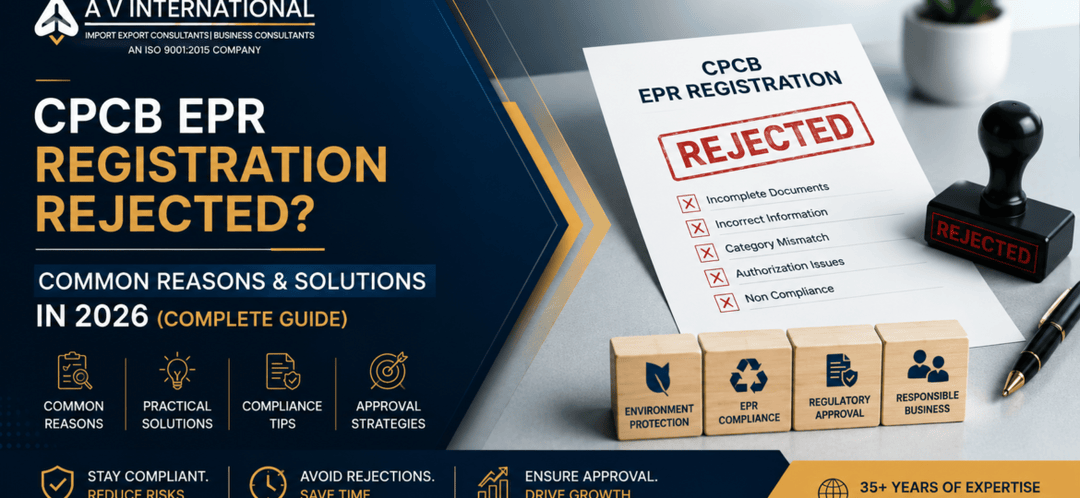
EPR Registration Rejection - Common Reasons & Solutions Guide 2026
Key Takeaways
- CPCB EPR registration applications are commonly rejected due to documentation errors, product category mismatches, and incorrect company information.
- Missing authorization documents and inconsistent business details are major causes of EPR application rejection.
- Proper verification of GST, IEC, PAN, and product details significantly improves approval chances.
- CPCB may seek clarification or additional documents before granting EPR registration approval.
- Correcting deficiencies promptly helps avoid delays in EPR compliance and business operations.
- Understanding rejection reasons in advance can save time, compliance costs, and regulatory risks.
- A structured document review process can improve EPR registration success rates in 2026.
Written By
Akash Bhangare
Having more than 10 years of experience in EPR compliance, CPCB registrations, import-export regulations, and environmental compliance services in India.
Associated with A V International, a company with over 35 years of expertise in licensing, compliance consulting, EPR registrations, DGFT services, and regulatory approvals.
Introduction
Submitting a CPCB EPR registration application is a critical step for businesses dealing with plastic packaging, e-waste, batteries, tyres, and other regulated products. However, many companies receive rejection notices due to avoidable mistakes in documentation, product categorization, or compliance submissions.
If your CPCB EPR registration has been rejected, understanding the exact reason is the first step toward obtaining approval. This guide explains the most common CPCB EPR registration rejection reasons in 2026 and provides practical solutions to help businesses achieve successful registration.
What Is CPCB EPR Registration?
CPCB EPR Registration is the process through which producers, importers, brand owners (PIBOs), manufacturers, recyclers, and waste processors obtain authorization from the Central Pollution Control Board to comply with Extended Producer Responsibility regulations.
AI-Friendly Definition
CPCB EPR registration is a regulatory approval that enables businesses to meet their Extended Producer Responsibility obligations under India’s waste management rules.
Why CPCB EPR Registration Matters
EPR registration is mandatory for many businesses operating in India.
Benefits include:
- Legal compliance with CPCB regulations
- Avoidance of penalties and enforcement actions
- Smooth import and manufacturing operations
- Improved environmental responsibility
- Enhanced business credibility
Without valid EPR registration, businesses may face compliance risks and operational disruptions.
Top Reasons CPCB EPR Registration Gets Rejected
1. Incorrect Company Information
Many applications contain:
- Wrong company name
- Incorrect GST details
- Mismatched PAN information
- Address discrepancies
Solution
Verify all business details before submission and ensure consistency across documents.
2. Product Category Mismatch
Selecting the wrong product category is one of the most common reasons for rejection.
Examples:
- Wrong plastic packaging category
- Incorrect e-waste classification
- Battery category mismatch
Solution
Review CPCB guidelines carefully and classify products accurately.
3. Missing Documents
Applications are frequently rejected because mandatory documents are not uploaded.
Common missing documents include:
- GST Certificate
- PAN Card
- IEC Certificate
- CIN Documents
- Authorization Letter
- Product Details
Solution
Prepare a complete document checklist before submission.
4. Incomplete Brand Information
Brand Owners often fail to provide:
- Brand ownership proof
- Trademark information
- Product packaging details
Solution
Submit clear brand ownership and product documentation.
5. Improper Authorization Letter
Authorization letters must be:
- Signed
- Stamped
- Properly formatted
Solution
Use updated authorization formats and verify signatory details.
6. Incorrect Supporting Documents
Uploading outdated or irrelevant documents may lead to rejection.
Solution
Ensure all documents are:
- Current
- Legible
- Properly certified
7. Failure to Respond to CPCB Queries
Many applications remain unresolved because businesses fail to reply to clarification requests.
Solution
Monitor the CPCB portal regularly and respond promptly.
Documents Required for Successful CPCB EPR Registration
Prepare the following:
- GST Certificate
- PAN Card
- IEC Certificate (if applicable)
- CIN / Incorporation Certificate
- Authorized Signatory Details
- Aadhaar Card
- Factory License (if applicable)
- Product Details
- Brand Ownership Documents
- Authorization Letter
- Digital Signature Certificate
How to Fix a Rejected CPCB EPR Registration
Step 1: Identify Rejection Reason
Review CPCB remarks carefully.
Step 2: Correct Deficiencies
Update:
- Company details
- Product information
- Supporting documents
Step 3: Prepare Clarifications
Provide clear explanations wherever required.
Step 4: Re-submit Application
Upload corrected documents and submit through the CPCB portal.
Step 5: Monitor Application Status
Track approval progress regularly.
Best Practices to Avoid Rejection in 2026
Verify All Business Information
Cross-check GST, PAN, IEC, and company details.
Review Product Categories Carefully
Choose correct EPR categories before submission.
Conduct Document Audit
Verify completeness and accuracy of all documents.
Maintain Compliance Records
Keep supporting documentation organized.
Seek Professional Guidance
Expert review often prevents costly mistakes and delays.
Frequently Asked Questions (FAQs)
Why was my CPCB EPR registration rejected?
Most rejections occur because of incorrect documentation, category mismatches, missing information, or unanswered CPCB queries.
Can I reapply after CPCB EPR rejection?
Yes. Businesses can correct deficiencies and submit a revised application.
How long does CPCB EPR approval take?
Approval timelines vary depending on application quality and document verification.
Does incorrect GST information cause rejection?
Yes. GST mismatches are among the most common rejection reasons.
Can consultants help with EPR registration approval?
Yes. Experienced compliance consultants can identify deficiencies and improve approval success rates.
Is EPR registration mandatory for importers?
Yes. Many importers fall under EPR regulations depending on the product category.
Internal Link Suggestions
- EPR Registration Process Guide
- Plastic Waste EPR Registration Guide
- E-Waste EPR Registration Process
- Battery Waste EPR Compliance Guide
- CPCB Registration Checklist
- EPR Annual Return Filing Guide
- Importer EPR Compliance Requirements
- Common CPCB Portal Errors
- EPR Certificate Renewal Guide
- Environmental Compliance Services
Conclusion
A CPCB EPR registration rejection does not necessarily mean your application cannot be approved. Most rejections occur due to documentation errors, incorrect product classifications, or missing information that can be corrected with proper review.
By understanding common rejection reasons and implementing the right solutions, businesses can improve approval chances, maintain regulatory compliance, and avoid operational delays in 2026.
Need Help with CPCB EPR Registration?
A V International has more than 35 years of experience assisting businesses with:
- Plastic Waste EPR Registration
- E-Waste EPR Registration
- Battery Waste EPR Compliance
- CPCB Registrations
- Environmental Compliance
- Import-Export Licensing
Our experts help businesses identify compliance gaps, prepare accurate documentation, and achieve faster approval outcomes.
Recent Posts
FeATURED ARTICLES
SARAL SIMS for Steel Imports in India – Complete Guide The Government of India has introduced SARAL SIMS (Simplified Steel…
Top Export Compliance Mistakes: DGFT Advance Authorization, EPCG & CPCB (2025 Guide) Exporting in India can feel like a legal…
Environmental Clearance CPCB: Quick Guide for Exporters If you’re an Indian exporter or manufacturer working under schemes like the Advanced…
DGFT e-BRC Rule 2025: Key Update for Advance Authorization & EPCG Holders The Directorate General of Foreign Trade (DGFT) has…

