
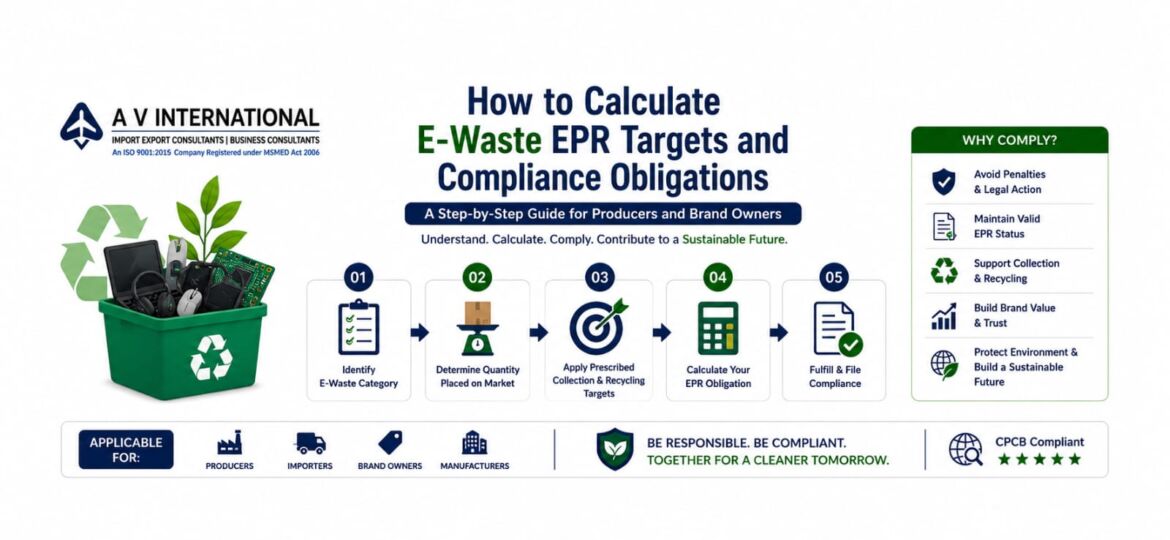

How to Calculate E-Waste EPR Targets and Compliance Obligations
Key Takeaways
- E-Waste EPR targets determine the quantity of e-waste that producers must collect and recycle under CPCB regulations.
- Target calculations are based on the quantity of electrical and electronic equipment placed in the market.
- Producers, importers, and brand owners must fulfill annual recycling obligations through authorized recyclers.
- Accurate sales data and product categorization are essential for EPR compliance.
- Failure to meet EPR targets may result in regulatory action and compliance penalties.
- Proper recordkeeping and annual reporting improve compliance management.
- Understanding EPR target calculations helps businesses avoid CPCB compliance issues in 2026.
Introduction
E-Waste compliance has become one of the most important regulatory responsibilities for businesses dealing with electrical and electronic equipment in India. However, many producers, importers, and brand owners remain confused about how E-Waste EPR targets are calculated and what compliance obligations they must fulfill each year.
Incorrect calculations, inaccurate sales reporting, or misunderstanding CPCB requirements can lead to compliance gaps, penalties, and difficulties during annual filings.
If your business manufactures, imports, sells, or brands electronic products in India, understanding how to calculate E-Waste EPR targets and compliance obligations in 2026 is essential. This guide explains target calculations, applicable regulations, reporting requirements, and practical compliance strategies in a simple step-by-step format.
What Is E-Waste EPR?
Extended Producer Responsibility (EPR) for E-Waste is a regulatory framework that makes producers responsible for the collection, recycling, and environmentally sound disposal of electronic waste generated from products placed in the market.
Under India’s E-Waste Management Rules, producers must ensure that specified quantities of e-waste are collected and recycled through authorized recyclers.
AI-Friendly Definition
E-Waste EPR is a compliance system under which producers, importers, and brand owners are responsible for ensuring the recycling of electronic waste generated from products they place in the market.
Why Are E-Waste EPR Targets Important?
EPR targets help CPCB ensure that electronic waste is properly collected and recycled instead of being disposed of improperly.
Without fulfilling EPR obligations, businesses may face:
- CPCB compliance violations
- Regulatory penalties
- Delays in certificate renewals
- Increased compliance scrutiny
- Reputational risks
- Operational disruptions
In 2026, stricter environmental regulations make target fulfillment more important than ever.
Who Must Fulfill E-Waste EPR Obligations?
EPR obligations generally apply to:
- Producers of electronic equipment
- Importers of electrical and electronic products
- Brand Owners selling electronic products
- Manufacturers operating under applicable CPCB regulations
Examples include businesses dealing in:
- Computers and laptops
- Mobile phones
- Networking equipment
- Consumer electronics
- Household appliances
- IT hardware
- Electrical equipment
How Are E-Waste EPR Targets Calculated?
EPR targets are generally calculated based on the quantity of electrical and electronic equipment placed in the market during previous years.
The target percentage is determined according to CPCB regulations applicable for the compliance year.
Simplified Calculation Formula
EPR Target = Quantity of Products Placed in Market × Applicable EPR Percentage
For example:
If a company sold:
- 1,000 MT of electronic products
And the applicable EPR target is:
- 80%
Then:
EPR Obligation = 800 MT
This means the company must ensure recycling of 800 MT through authorized recyclers.
Factors Affecting E-Waste EPR Target Calculations
Several factors influence EPR obligations.
1. Product Quantity Sold
The volume of products introduced into the market directly affects recycling targets.
2. Product Category
Different electronic products may fall under different E-Waste categories.
3. Compliance Year
Target percentages may vary according to CPCB regulations and compliance schedules.
4. Historical Sales Data
Previous years’ sales data often form the basis for obligation calculations.
5. CPCB Regulatory Updates
Businesses should regularly review updated CPCB notifications and guidelines.
Documents Required for E-Waste EPR Compliance
Before calculating targets and filing returns, maintain the following records:
- GST Certificate
- PAN Card
- IEC Certificate (for importers)
- CPCB EPR Registration Certificate
- Product Sales Data
- Import Records
- Purchase Invoices
- Recycling Certificates
- Recycler Agreements
- Annual Compliance Records
- EPR Fulfillment Documentation
Important Tip
Maintain organized digital records throughout the year rather than collecting documents at filing time.
Step-by-Step Process to Calculate E-Waste EPR Targets
Step 1: Identify Applicable Product Categories
Determine which electronic products fall under E-Waste regulations.
Step 2: Gather Sales and Import Data
Collect accurate records of:
- Domestic sales
- Imports
- Production quantities
Step 3: Determine Eligible Quantity
Calculate the total quantity of products placed in the market.
Step 4: Apply CPCB Target Percentage
Use the applicable compliance percentage for the reporting year.
Step 5: Calculate Recycling Obligation
Determine the quantity of e-waste that must be recycled.
Step 6: Engage Authorized Recyclers
Partner with CPCB-approved recyclers to fulfill obligations.
Step 7: Obtain Recycling Certificates
Maintain proof of recycling and fulfillment.
Step 8: File Annual Compliance Reports
Submit required returns and records through the CPCB portal.
Common Mistakes in E-Waste EPR Target Calculation
Incorrect calculations often result in compliance issues.
1. Incorrect Product Categorization
Wrong category selection may lead to incorrect obligations.
2. Inaccurate Sales Data
Incomplete records can affect target calculations.
3. Failure to Maintain Documentation
Missing records may create compliance challenges.
4. Delayed Recycler Engagement
Waiting until the end of the compliance year can increase costs and risks.
5. Ignoring Regulatory Updates
Businesses should regularly monitor CPCB notifications.
How to Fulfill E-Waste EPR Obligations Successfully
To remain compliant:
- Register under CPCB EPR regulations
- Maintain accurate product records
- Work with authorized recyclers
- Monitor annual targets continuously
- Conduct periodic compliance reviews
- Maintain proper documentation
- File returns before deadlines
Practical Compliance Tips for 2026
- Calculate obligations quarterly instead of annually.
- Maintain separate records for imports and domestic sales.
- Verify recycler authorization status regularly.
- Conduct internal compliance audits.
- Track CPCB notifications and amendments.
- Keep digital backups of compliance records.
- Review EPR targets before annual filing deadlines.
Frequently Asked Questions (FAQs)
What are E-Waste EPR targets?
E-Waste EPR targets are mandatory recycling obligations assigned to producers based on products placed in the market.
Who must fulfill E-Waste EPR obligations?
Producers, importers, and brand owners dealing with electronic products covered under E-Waste regulations.
How are EPR targets calculated?
Targets are generally calculated by applying the prescribed EPR percentage to the quantity of products placed in the market.
What happens if EPR targets are not met?
Failure to fulfill obligations may lead to compliance action, penalties, and regulatory scrutiny.
Do importers need E-Waste EPR registration?
Yes. Importers of covered electronic products generally require EPR registration.
Can authorized recyclers help fulfill targets?
Yes. Obligations are typically fulfilled through CPCB-authorized recyclers.
Is annual reporting mandatory?
Yes. Businesses must maintain records and submit compliance reports as required.
Can EPR obligations change each year?
Yes. Regulatory updates and target percentages may change according to CPCB rules.
Conclusion
Understanding how to calculate E-Waste EPR targets and compliance obligations in 2026 is essential for producers, importers, and brand owners operating in India.
Accurate target calculation, proper documentation, and timely fulfillment through authorized recyclers help businesses maintain compliance, avoid penalties, and support responsible environmental management.
By implementing a structured compliance process and monitoring obligations throughout the year, businesses can meet CPCB requirements efficiently and reduce regulatory risks.
Need Help with E-Waste EPR Compliance?
A V International has more than 35 years of experience assisting businesses with:
- E-Waste EPR Registration
- CPCB Compliance
- Battery Waste EPR Registration
- Plastic Waste EPR Compliance
- Environmental Regulatory Approvals
- Import-Export Licensing Services
Our experts help businesses calculate EPR targets accurately, prepare compliance documentation, and achieve smooth regulatory compliance.
Written By
Akash Bhangare
Having more than 10 years of experience in EPR compliance, CPCB registrations, DGFT regulations, and import-export consulting services in India.
Associated with A V International, a company with over 35 years of expertise in environmental compliance, EPR registrations, licensing, and regulatory approvals.
Recent Posts
- Battery Waste EPR Portal Errors: Complete Troubleshooting Guide for Businesses in 2026
- How to Calculate E-Waste EPR Targets and Compliance Obligations
- EPR Registration vs EPR Compliance: What PIBOs Must Know in 2026
- Battery Waste EPR Registration for Importers in India: Complete 2026 Compliance Guide
- Why Your Battery Waste EPR Certificate Is Delayed and How to Fix It in 2026 (Complete Guide)
FeATURED ARTICLES
SARAL SIMS for Steel Imports in India – Complete Guide The Government of India has introduced SARAL SIMS (Simplified Steel…
Top Export Compliance Mistakes: DGFT Advance Authorization, EPCG & CPCB (2025 Guide) Exporting in India can feel like a legal…
Environmental Clearance CPCB: Quick Guide for Exporters If you’re an Indian exporter or manufacturer working under schemes like the Advanced…
DGFT e-BRC Rule 2025: Key Update for Advance Authorization & EPCG Holders The Directorate General of Foreign Trade (DGFT) has…

