India's Leading DGFT Consultants
ROSCTL_Benefits_for_Textile_Exporters_1080

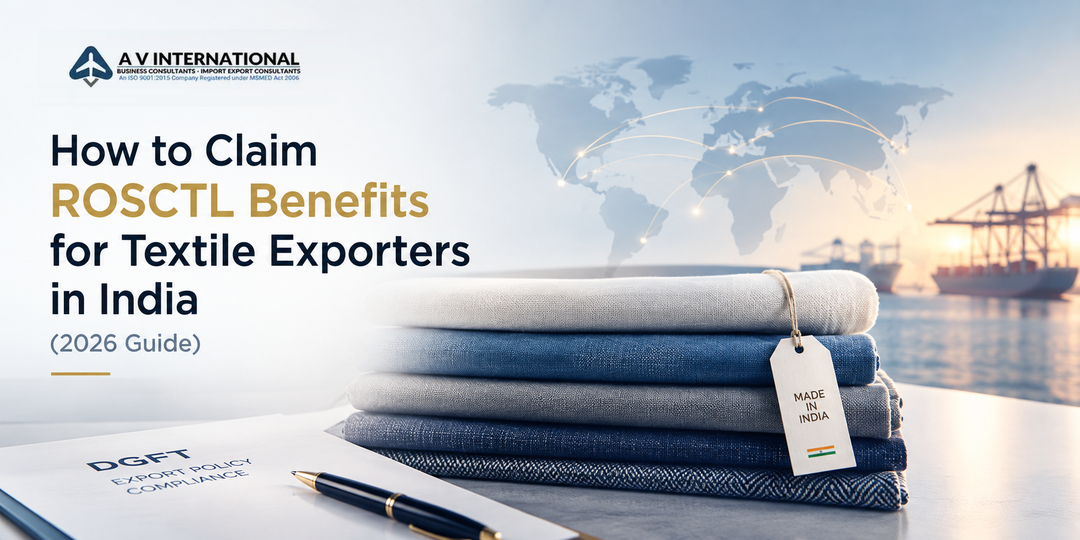
How to Claim ROSCTL Benefits for Textile Exporters in India (2026 Guide)

KEY TAKEAWAYS
  • ROSCTL covers apparel, garments and made-ups exported under Chapters 61, 62 and 63.
  • The scheme is extended up to 31 December 2026 with the same scope, rates and eligibility.
  • There is no separate application. The claim starts with a declaration in the shipping bill.
  • The benefit is issued as a transferable e-scrip through ICEGATE.
  • A wrong or missed declaration at filing can cost you the claim, so accuracy matters.
INTRODUCTION

Textile exporters work on thin margins. State and central taxes embedded in the product, which are not refunded through GST or duty drawback, quietly eat into those margins.

The Rebate of State and Central Taxes and Levies (ROSCTL) scheme was designed to fix this gap. Yet many exporters still lose benefits because of small errors in the shipping bill. This guide explains how to claim ROSCTL benefits correctly in 2026.

WHAT IS THE ROSCTL SCHEME?

ROSCTL is an export incentive for apparel, garments and made-ups. It works on the principle of zero-rated exports, meaning taxes should not be exported along with the goods.

The rebate is given in addition to duty drawback. It is issued as an electronic duty credit scrip, and the whole process runs through the Customs system on ICEGATE.

WHO CAN CLAIM ROSCTL BENEFITS?

You can generally claim ROSCTL if you meet the following conditions:

  • You export apparel or garments (Chapters 61 and 62) or made-ups (Chapter 63).
  • You hold a valid IEC and are registered on ICEGATE.
  • Your shipment goes through an EDI-enabled port.
  • Your product has a rate and cap notified under the scheme.

Exports under Advance Authorisation or DFIA, and exports by 100% EOUs and SEZ units, are generally not eligible. Check your export route before filing.

Also note that ROSCTL and RoDTEP do not apply together on the same goods. Chapters 61 to 63 fall under ROSCTL, while other textile products such as yarn and fabrics continue under RoDTEP.

LATEST UPDATE: SCHEME EXTENDED TILL 31 DECEMBER 2026

The Ministry of Textiles has extended ROSCTL from 1 October 2026 to 31 December 2026 through a notification dated 30 September 2026. Existing rates, caps and eligibility conditions remain unchanged.

The Government has kept the right to adjust rates and caps if underlying conditions change. During 2025-26, the scheme supported more than 15,400 exporters, mostly MSMEs.

Because recent extensions have been short, build the latest rates into your pricing and track every new notification.

STEP-BY-STEP PROCESS TO CLAIM ROSCTL
  1. Confirm your product classification and the notified ROSCTL rate and cap for that tariff item.
  2. Make sure your IEC is active and your ICEGATE account is working with a valid DSC.
  3. File the shipping bill and declare the ROSCTL claim at item level using the applicable scheme code.
  4. Complete the Export General Manifest (EGM) so Customs can process the claim.
  5. Check the scroll of admissible shipping bills in your ICEGATE login.
  6. Generate the e-scrip, then use it to pay Basic Customs Duty or transfer it to another IEC holder.

ROSCTL scrip is issued without insisting on realisation of export proceeds. Even so, follow FEMA realisation timelines to avoid problems later.

FEATURED SNIPPET ANSWER

To claim ROSCTL benefits, a textile exporter must export eligible apparel or made-ups under Chapters 61 to 63 through an EDI port, declare the ROSCTL claim in the shipping bill, file the EGM, wait for Customs to generate the scroll, and then generate the e-scrip on ICEGATE for use or transfer.

COMMON MISTAKES TO AVOID
  • Not declaring the ROSCTL claim, or choosing the wrong scheme code, in the shipping bill.
  • Claiming RoDTEP on goods that fall under ROSCTL.
  • Mismatch between the HS code in the invoice and the shipping bill.
  • Mismatch of FOB value between the shipping bill and the export invoice.
  • Ignoring the EGM, which delays scroll generation.
  • Filing shipments under Advance Authorisation or SEZ routes and expecting ROSCTL.
PRACTICAL TIPS
  • Prepare a pre-shipment checklist covering HS code, rate, cap and scheme code.
  • Reconcile scrolls with your shipping bill records every month.
  • Plan scrip usage in advance, since scrips are best used against Basic Customs Duty or sold to importers.
  • Keep records of every notification, as rates and caps can change.
FAQS
  1. Is the ROSCTL scheme available in 2026?

Yes. It is extended up to 31 December 2026 for apparel, garments and made-ups.

  1. Do I need to apply separately for ROSCTL?

No. The shipping bill declaration is your claim. Customs processes it after EGM filing.

  1. Can I claim ROSCTL and RoDTEP together?

Not on the same goods. Apparel and made-ups in Chapters 61 to 63 are covered under ROSCTL, and other textile products under RoDTEP.

  1. How do I receive the benefit?

As an electronic duty credit scrip on ICEGATE. It can be used for Basic Customs Duty or transferred.

  1. Are Advance Authorisation, EOU or SEZ exports eligible?

Generally no. Confirm your export route before filing the shipping bill.

  1. What if I forget to declare ROSCTL in the shipping bill?

The declaration is made at the time of filing, so a miss can mean losing the claim on that shipment. Consult a compliance professional immediately to check what options exist.

CONCLUSION

ROSCTL can improve export margins in a real way, but only when the paperwork is right from the start. Correct classification, accurate shipping bill declarations and regular scroll tracking are the three habits that protect your claim.

With the scheme now extended to 31 December 2026, exporters should use this window to tighten their process and plan for future notifications.

CTA

Need help with ROSCTL, RoDTEP, duty drawback or other DGFT and Customs compliance? A V International has more than 35 years of experience guiding exporters through export incentives, licences and regulatory approvals.

Contact A V International today for practical, end-to-end support for your export business.

WRITTEN BY

Akash Bhangare

Having more than 10 years of experience in EPR Compliance, Legal Metrology, DGFT Regulations, and Import Export Consulting Services in India.

Associated with A V International, a company with over 35 years of expertise in Environmental Compliance, EPR Registrations, Licensing, and Regulatory Approvals.

FeATURED ARTICLES

Related Posts