India's Leading DGFT Consultants
IEC Code vs ICEGATE Registration guide explaining import-export identification and customs portal access in India

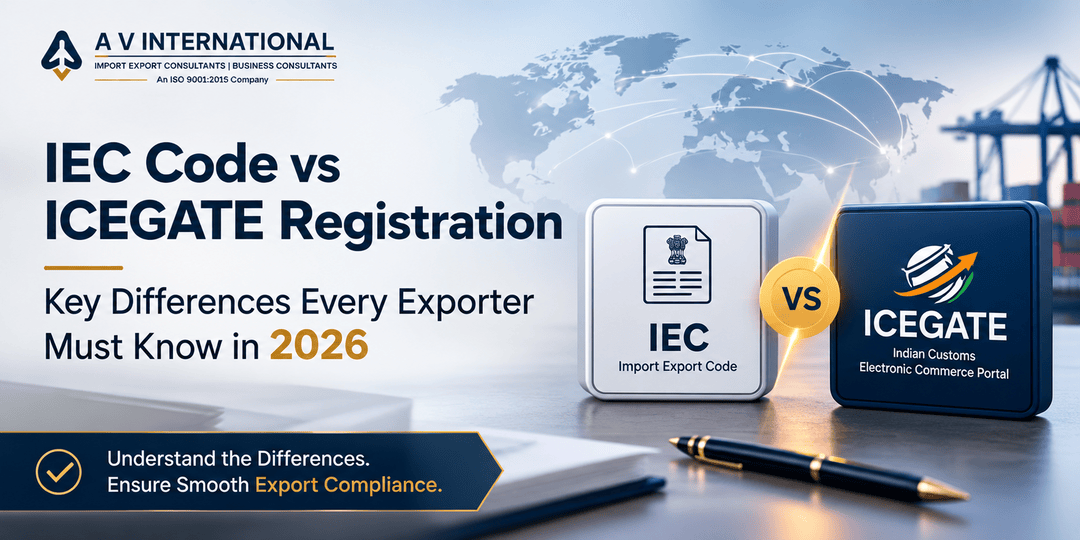
IEC Code vs ICEGATE Registration – Key Differences Every Exporter Must Know in 2026

Key Takeaways

  • IEC and ICEGATE registration serve different purposes in India’s import-export system.

  • IEC is issued by the Directorate General of Foreign Trade (DGFT) and is generally mandatory for importing or exporting goods, subject to exemptions.

  • ICEGATE is the Indian Customs electronic portal used for customs-related online services and document filing.

  • Obtaining an IEC does not automatically mean that the business has completed ICEGATE registration.

  • Businesses should verify IEC status, update details when required, and complete the relevant ICEGATE registration process before filing customs documents.

  • Incorrect or incomplete registration details can cause avoidable operational delays.

Introduction

Businesses starting import-export operations in India often confuse IEC Code with ICEGATE registration. Although both are important for international trade, they serve different functions.

IEC establishes the importer-exporter identification required under the foreign trade framework. ICEGATE registration enables eligible users to access customs-related online services and file or manage documents through the customs portal.

Understanding the difference helps exporters prepare for shipping bill filing, importers manage Bills of Entry, and businesses avoid registration-related delays.

What Is an IEC Code?

An Importer Exporter Code (IEC) is a business identification number issued by DGFT. It is generally required for importing or exporting goods from India unless a specific exemption applies.

Under the current framework, the IEC is linked to the entity’s PAN but is separately issued by DGFT through its online application system.

Businesses that commonly require an IEC include:

  • Manufacturers importing raw materials or machinery.

  • Exporters selling goods to overseas customers.

  • Traders involved in international commerce.

  • Importers purchasing products from foreign suppliers.

  • Eligible businesses applying for benefits under applicable foreign trade schemes.

IEC holders must also comply with applicable IEC profile update requirements. DGFT’s framework generally requires electronic confirmation or updating of IEC details during the April–June period each year, including confirmation when there are no changes, subject to current DGFT instructions.

Official reference: DGFT IEC Services.

What Is ICEGATE Registration?

ICEGATE stands for Indian Customs Electronic Gateway. It is the electronic portal used by Indian Customs for online customs-related transactions and services.

ICEGATE registration provides an eligible user with an account or ICEGATE ID to access applicable services. Depending on the user’s role and authorization, these may include:

  • Electronic filing of Bills of Entry and shipping bills.

  • Tracking customs document status.

  • Receiving acknowledgements and filing-related information.

  • Accessing eligible customs e-payment and export incentive services.

  • Managing other customs-related online transactions.

Different types of users may register under different categories, including importers, exporters, customs brokers, shipping lines, and other trade participants.

Official reference: ICEGATE Portal.

IEC Code vs ICEGATE Registration: Key Differences

Basis IEC Code ICEGATE Registration
Issuing authority/platform DGFT Indian Customs through ICEGATE
Main purpose Importer-exporter identification Access to customs-related electronic services
Primary use Establishes the required trade identification Supports online customs document filing and transactions
Application Through DGFT IEC services Through ICEGATE registration
Identification IEC linked to the entity’s PAN ICEGATE user ID and applicable registered entity details
Ongoing requirement Maintain and update IEC details as prescribed Maintain account details and meet applicable portal requirements
Does it replace the other? No No

Remember: IEC and ICEGATE registration are complementary, not interchangeable. An IEC does not itself provide an ICEGATE user account.

Is IEC Enough for Import and Export?

No, an IEC alone may not be sufficient to complete every customs-related online activity.

For example, an exporter may already have an IEC but still need to complete the relevant ICEGATE registration and authorization arrangements for online shipping bill filing.

Similarly, an importer may have a valid IEC but need access to ICEGATE services to manage electronic customs transactions.

Other requirements may also apply depending on the product, transaction, port, and applicable regulations. These can include specific licences, registrations, declarations, and supporting documents.

Documents and Details to Keep Ready

For IEC Application or Updates

Depending on the application, businesses should prepare:

  • PAN details of the entity.

  • Business constitution and applicant information.

  • Address and contact details.

  • Bank account information and supporting evidence, where required.

  • Aadhaar or digital authentication details, as applicable.

  • Other information or documents requested by the DGFT portal.

For ICEGATE Registration

Requirements depend on the user category and current portal process. Common details may include:

  • Valid IEC and corresponding business information, where applicable.

  • PAN and GSTIN details, as required.

  • Authorized signatory information.

  • Registered email address and mobile number.

  • Digital signature or e-sign authentication, where applicable.

  • Supporting documents requested for the selected registration category.

Always follow the current instructions displayed on the official portals rather than relying on a fixed document list for every applicant.

How to Complete Both Requirements

Step 1: Apply for IEC. Visit the DGFT portal and complete the applicable IEC application process if your business requires an IEC.

Step 2: Verify IEC details. Check the business name, PAN linkage, contact information, and current IEC status.

Step 3: Complete applicable IEC updates. Follow the annual confirmation and modification requirements prescribed by DGFT.

Step 4: Register on ICEGATE. Access the official portal and select the relevant registration option for your user category.

Step 5: Complete authentication. Provide the requested information and complete the applicable verification or digital authentication steps.

Step 6: Check access and authorization. Confirm that your registration is active and that you can access the customs services required for your business.

Step 7: Prepare for customs filing. Ensure the shipping bill or Bill of Entry details and supporting documents are accurate before proceeding.

Common Mistakes to Avoid in 2026

  • Assuming IEC automatically completes ICEGATE registration.

  • Entering business or authorized signatory details incorrectly.

  • Ignoring applicable IEC annual update requirements.

  • Using an inactive or incorrectly configured account.

  • Failing to complete required digital authentication.

  • Waiting until shipment filing to identify registration issues.

  • Assuming that IEC and ICEGATE registration alone satisfy every product-specific compliance requirement.

Reviewing these details before a shipment is processed can help reduce avoidable delays.

Featured Snippet: What Is the Difference Between IEC and ICEGATE Registration?

IEC is the importer-exporter identification issued by DGFT and is generally required for importing or exporting goods, subject to exemptions. ICEGATE registration provides access to Indian Customs’ electronic services, including applicable online customs document filing. Both serve different purposes, and businesses may need both to manage import-export operations.

Frequently Asked Questions

1. Is IEC mandatory for every exporter in India?

IEC is generally required for exporting goods, subject to exemptions specified under the applicable foreign trade framework. Businesses should verify whether an exemption applies to their activity.

2. Can I register on ICEGATE without an IEC?

ICEGATE supports multiple user categories, including certain non-IEC users. However, importers and exporters undertaking transactions that require an IEC must meet the applicable IEC requirements.

3. Does IEC registration automatically activate ICEGATE?

No. IEC issuance and ICEGATE registration are separate processes. Complete the relevant ICEGATE registration steps for the services you need.

4. How often must IEC details be updated?

IEC holders generally need to confirm or update their IEC details electronically during the April–June period each year, in accordance with current DGFT instructions.

5. What is the official website for ICEGATE registration?

Visit www.icegate.gov.in and use the official registration facility.

6. Can a customs broker help with ICEGATE registration?

A customs broker or compliance consultant may assist with the process, documentation, and troubleshooting. The business should ensure that its own details and authorizations are accurate.

Conclusion

IEC Code and ICEGATE registration are two distinct requirements that support import-export operations in India. IEC establishes the required importer-exporter identification, while ICEGATE provides access to customs-related electronic services.

Businesses should maintain valid IEC details, complete the relevant ICEGATE registration, and verify all applicable product and transaction requirements before shipment processing.

Need Professional Help with IEC or ICEGATE Registration?

A V International assists businesses with IEC registration and updates, ICEGATE registration support, customs documentation, DGFT procedures, and import-export compliance.

Our team helps importers and exporters understand the applicable requirements and prepare for smoother customs operations.

Written By

Akash Bhangare

Having more than 10 years of experience in EPR Compliance, Legal Metrology, DGFT Regulations, and Import Export Consulting Services in India.

Associated with A V International, a company with over 35 years of expertise in Environmental Compliance, EPR Registrations, Licensing, and Regulatory Approvals.

FeATURED ARTICLES

Related Posts